Showing posts with label travel. Show all posts


The city of Uji lies on the southern outskirts of Kyoto, along the banks of the Uji river. Visitors are drawn by its Shinto shrines and Buddhist temples, and for literary buffs, its role in the Tale of Genji. It's also known for producing superior quality green tea, and is home to the oldest tea shop in Japan, and possibly the world--the Tsuen tea shop.

We didn't know any of this going there. As far as we were concerned, we were in Kyoto, the old capital of Japan, which allegedly had lots of old cultural things and was very pretty. Also, Rurouni Kenshin was set here. And geishas.

We took the Shinkansen from Tokyo station to Kyoto station one early morning, and after a pleasant and smooth train ride (and a breakfast of Muji bread and convenience store onigiri), were picked up by our cousins and friend. Our cousins had a car, so we all piled in and they carted us off to Uji.

First things first: the Uji river is lovely. Of the set of photos my sister took of our trip, the pictures of this place are what impress me the most. The scene looks like a painting: the backdrop of tree-filled hills, the curve of the riverbank, and the paper lanterns dancing in the wind. Add a scattering of sakura, and it makes a beautiful, quiet picture of semi-rural Japan.

We took photos on Uji bridge, but sadly, missed the statue of Murasaki. It was all very random: arrive at beautiful place. Scatter. Take photos of everything. My cousin: "I don't know what we're doing, but it's pretty good."

I tried a green tea bun with azuki bean filling. It was all right.


We visited Byodo-in Temple next, which was built during the Heian period. The temple is a UNESCO World Heritage Site, and was formerly the villa of a courtier before it became a Buddhist temple. We were greeted by cherry blossom trees going in. I must mention that it was a rapturous event every single time we came across a sakura tree. Our Japan trip was set in mid-April, and in Tokyo, that meant the first wave of cherry blossoms was over--the delicate 2 or 3 petal variety everyone loved. Fortunately, that was not the case in Kyoto. The landscape wasn't teeming with pale pink blooms anymore, but we found some late bloomers in here and there.


What do I say about Byodo-in? Well, it was aesthetically breathtaking, which can be said about a lot of the structures in Japan. I envy this country's art culture. There were a lot of tourists milling around, and the Phoenix Hall itself (pictured) was only accessible if you bought a special ticket. We opted for the regular ticket, which granted us access to the temple museum, which was underground. Buddhist artefacts and artwork were on display, and I do remember a rather impressive beaten-metal relief of several deities. We spent around an hour and a half at Byodo-in Temple, before piling back into the family van to grab some lunch on the way to Nara.


From japan-guide.com: Uji Bridge is a 5-10 minute walk north of JR Uji Station or just south of Keihan Uji Station.

Byodoin
Renge-116 Uji
Kyoto Prefecture 611-0021
Japan

Photos by the illustrious Abby Portugal
If you can only visit one palace in Seoul, make it this one. 
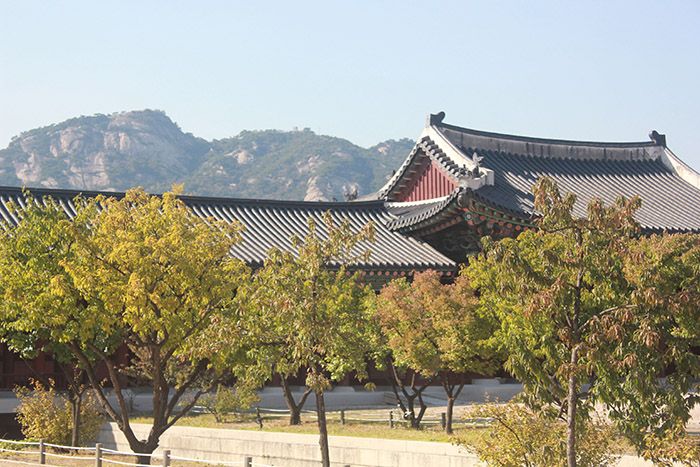
The tail end of our trip: a visit to the second of Seoul's majestic palaces, Changdeokgung. This palace complex had a gigantic 'secret' garden, built for the leisure of the royal court. Lush greenery, winding stone pathways, a number of ornately painted pavilions in bright colors, the bending trees flush with fall colors.


Observations: 

1. A Filipino family, also garbed in Uniqlo
2. Red bean manju bought from a food truck = hunger buster!
3. Everyone, garbed in Uniqlo.

Ssamziegil: Haven of cute and sometimes expensive things
After that, exhausted by all the walking (as usual), we headed to Insadong for extremely late lunch  and some shopping. Spotted: A foreigner playing violin (he's a fixture, I believe), street vendors selling all kinds of cute things like socks, keychains, magnets and kimbap, strange "fish ice cream" (ice cream in a tube?) and cute buildings. We loved Ssamziegil and all the artsy things stored within. My parents scoured the traditional souvenir shops for a lamp to bring home, and ended up getting picture frames instead. I bought some magnets and a pair of socks. The siblings got postcards, keychains and socks as well. We're definitely suckers for cute things.

The Insadong Violin Man
Wall art in Ssamziegil
Insadong: Laden with souvenirs, both kitschy and not.

Observations:

1. A Turkish ice cream stand (I think every country we've visited has one). The Turkish dude knew Korean!
2. Helpful old man, only slightly creepy, trying to talk to us siblings (we wandered off)
3. Street vendors disapproved of us taking photos of their wares. Maybe because their wares were ripoffs and they didn't want to be found out? Or to protect against other people copying their stuff? 
4. Insadong closes rather early. 

After Insadong, we thought of dropping by Bada Pasta, a nice looking restaurant/cafe on the way to Studio 41st. AJ, one of the hosts, recommended it to us. It was around 9 pm though, and the place was about to close. The parents inquired, and the staff explained that they couldn't accommodate us, as it was going-home time. OK. We walked on, considering getting some take-out chicken or pizza, when the Bada Pasta people called us back. It was the owner, a slim and pretty Korean lady in her late twenties or early thirties. She'd cook for us, come on in. 

Left: Seafood Pasta & Bada Pasta


Such hospitality! Her name is Anna, and she made us Bada pasta and seafood pasta, and threw in a complimentary pot of Italian coffee. She'd learned cooking in Italy, and Bada Pasta was her first restaurant. It was a pretty awesome experience.

Our last day in Seoul consisted of a hurried but satisfying shopping trip in Namdaemun. My parents found an entire building dedicated to kitchenware, and after an hour in the ceramics section, bought a set of plates, serving platters and bowls. We weren't able to check out the building devoted entirely to stationary, but we did go down one of the food alleys. I bought dried cranberries (THE GREATEST), chocolate rocks, dried squid and the parents bought several bags of rice candy (so-so) and ginseng candy (no comment).

Namdaemun: Seoul's find-anything-here market


So yeah. After getting loads of stuff in Namdaemun, we trooped back to our guesthouse, said good-bye to the cats, to Sun (the host on duty) and left a note on their bulletin board, which was filled with similarly grateful notes from all their past guests. Dad booked a van to bring us back to Incheon airport, where did a bit more shopping (BB cream!) and then boarded the flight back home. We'll miss you, Korea! You're a really cool country, and I hope I get to go back there someday! 
It was Sunday, and we'd woken up too late to catch the English worship service at a church in Gangnam, so we opted to attend the one at Yongnak Church, which is near Myeongdong. The service there was at around 3pm though, so we used the morning to venture out to Bukchon Village. Bukchon is a neighborhood of traditional houses or hanoks, grouped together in a hilly area, producing winding stone-paved alleys and hidden doorways. The higher areas gave us a view of the tiled rooftops of the rest of the village, and it was indeed picturesque.


 We discovered several shops hidden in the corners--there was one promoting traditional Korean handicrafts. After walking around the area for a good bit, we headed to one of the busier streets lined with various souvenir shops and restaurants. It was lunch time, so the place was pretty busy. We ate in an unremarkable pasta x rice meal place (I forgot the name, but it was a chain). After lunch, we decided to head to Yongnak.

Yongnak, as I mentioned earlier, is in the Myeongdong area, and kind of "near" Namsan tower (we could see it in the distance). We got lost on the way, so I stopped by a Domino's to ask for directions. Koreans are generally very friendly and the pair behind the counter were quite helpful--Yongnak was a few blocks away, on the other street that made up the corner Domino's was on. The church building itself wasn't hard to miss. Yongnak is apparently one of the older churches in Seoul, and the mother church of our former pastor, who now heads the Yongnak chapter in Toronto.


After church, we headed to Dongdaemun for some shopping, but didn't get anything (it was a lazy Sunday evening), and passed by the Cheonggyechon river after.

Day 4 - Nami Island

According to my sister's Korean friends, Filipinos who travel to Korea seem so proud that they'd visited Nami Island, it being the set of the 2004 drama Winter Sonata. The only K-drama we were into that time was My Girl, but the loveliness of the island (especially in early Autumn) was apparent even without getting the drama references.

We took the train from Hongik station to Gapyeong station--transferring lines in between--and then took a cab from there to the ferry area. It was interesting because you could observe the decline in cosmopolitan-ness of the passengers, the farther away from Seoul we traveled. At one point there was an old lady peddling snacks down the aisles of the cart. Boarding the ferry to Namiseom Island, I noticed we were with the locals--kids on a field trip, vacationing couples, families. The leaves were lovely shades of orange and red, and our tummies were grumbling for lunch.


 After taking loads of pictures, we decided on eating at a pizza place further into the park. There were lots of things going on around us: kids were running and screaming in playgrounds, people were biking on single bikes, tandem bikes and passenger seat bikes, eating ice cream, eating street food. We got some ice cream after lunch and decided to walk around and explore some more. There was also an exhibit set up by a foundation.

Eventually, the siblings and I decided to rent bikes. We paid the deposit fee because we didn't have any valid card-sized ID on us. The guy at the bike renal place was getting pretty frustrated with me, haha. But after I shelled out the moolah and we got our bikes, everything was A-ok. We biked down towards the coast, where there were rafts for rent. We also found a nice open field bordered by yellow trees, where we biked around in circles. It was great to feel the cool air and the grass under wheels.

 After turning our bikes in, we were pretty tired. We walked around more, took more pictures (it isn't ever year you get to experience Fall!) and waited till darkness settled around the island. People were getting on the ferry, and it was time to go home.

Getting off Hongik station, we wandered around the Hongdae area looking for a place to eat. Of course, the delicious memory of our first night's samgyeupsal was beckoning us to try out more of that delicious grilled stuff--so we did. Sadly, it wasn't as good as our late night middle of the road experience, but it did fill our tummies. All hail the bacon.

We walked towards Studio 41st afterwards. Mom wanted some coffee, so we ducked into a cute, hipstery coffee shop on the way back. It was called Jass Cafe, and its shelves were laden with painted figurines; its walls were hung with art posters and illustrations. The coffee was pretty good. I got a peppermint latte. The girl manning the counter had a strong Californian accent; I commented on her good English and she mentioned she was from Los Angeles--although you could tell that it wasn't her first language.

Anyway, good coffee, pretty shop. A full meal was a nice way to end a pleasant but long day.


The second day of the trip started bright and early, with our usual organic breakfast and the smell of it sticking to our clothes. Dad booked a tour to the DMZ through the hostel the night before - the Demilitarized Zone rests at the border between North and South Korea and is home to a number of commemorative areas, a viewdeck, and a train station that seems to be perched on the edge of the world. It was all very interesting, and good reminder of the country's current, if sometimes taken for granted tensions with its hostile half.

Ribbons containing messages for loved ones. 


Imjingak Station - the first stop
Dorsan Observatory - Here we were able to see a propaganda village with NK's flag flying high. Buildings are deserted, though. One of the many for show faces of a highly secluded country. 

The bright, hopeful spot in this tumultuous history lesson was Dorsan station, which the South Koreans hope to connect to Pyeongyang. It struck me as highly unlikely, but the nearly deserted train station is a symbol: SoKor is positioning itself as the forgiver, the initiator, the straight sibling. Watchful, correct, hopeful that one day NoKor will wake up and come to its senses. 

At some point, we were taken to one of several tunnels the North Koreans dug from their side. It was funny and tiring and I was a bit envious of the senior citizens who got their own tram-things. But the tunnel walk, (and climb) made for good exercise after a few hours of being stuck in the bus.

After the tour was over, we got down somewhere near Gyangbokgung Palace (and the Cheonggyecheon stream, which came highly recommended by the guidebooks and the slightly scruffy globetrotting Australian (was he an Australian?) who was also on the tour. But it was Nanta for us that evening.


What I liked most about Nanta was its energy and ability to make you laugh uncontrollably. And the fact that good music, kitchen antics and humor transcend all language barriers. All hail the Sexy Chef.
Day one -- hit the palaces! I discovered how hard it is to pack four events into a day. The initial plan was to go to 2 palaces and then have dinner at Insadong and maybe check out Namsan Tower, but the our pace + unforseen incidents meant otherwise. 

It began with ~organic~ breakfast at Studio 41st, where we met up with Tita Young Kim shortly after. She brought us a couple of sim cards, five T-money cards and lots of helpfulness. She asked me about our itineraries and offered some suggestions. We had a bit of trouble with the sims because they wouldn't work on any of our phones at first. After repeatedly inserting the things / restarting our phones, we found it only worked on mine. (Yay for you, Samsung.)


We then walked to Hongik University station and set out for Gwanghwamun Square.

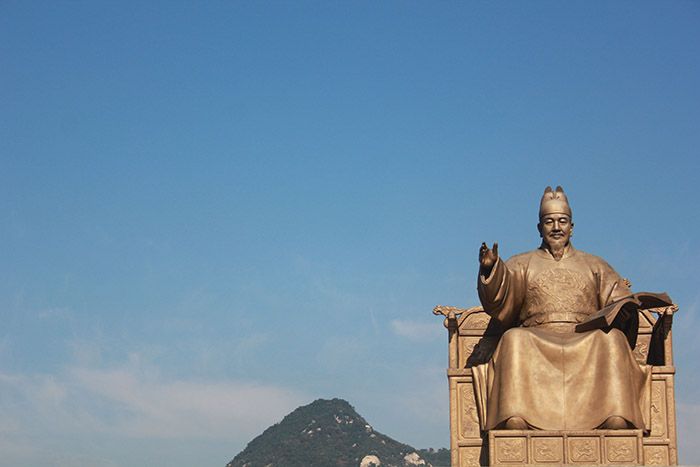
The day was sunny and the air was cool. Coming up from the station, the first thing I noticed was this massive building to our left -- apparently the Sejong Center for the Performing Arts. Nice and massive, with a bunch of event posters out in front. The large green island of Gwanghwamun Square stretched out before us, with King Sejong and then the palace. To the south was another statue of the Turtle Ship General (I never got his name).


After a few pictures and weirdness above ground, we went under King Sejong's statue to check out his museum. It was all right. There was a lovely throne, a ceiling full of constellations, various dioramas and interactive displays. I appreciated the man's intelligence--I wish I could read hanggul; it really is a prettily written language.

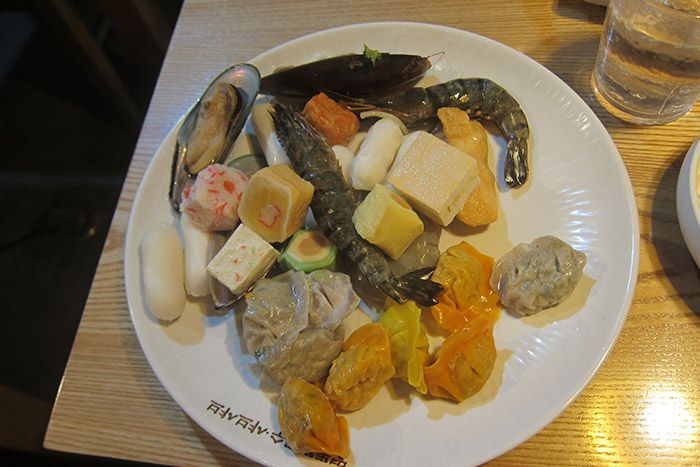
We went into another part of the museum, which was all about the Turtle ship. You could play a shooting game, pretending to be onboard the turtle ship. Or build the turtle ship out of wooden blocks, and make lots of turtle ship battle formations! And then we grew hungry, had lunch. There are a bunch of restaurants on the second floor of the museum. We picked one that served shabu-shabu, and were extremely grateful that Tita Young was there to help us with the language barrier. The restaurant manager--maybe in his fifties--was attentive and patient, helping us mix things and snerking (not in a bad way) at our cluelessness. But it was pretty good. We had two servings of seafood & beef shabu-shabu. The parents and I had the spicy variant, while the siblings and Tita Young had the none-spicy one.


We were done with lunch a little past 2pm, and just missed the changing of the guard at Gyangbokgung Palace! And consequently, the scheduled English tour as well. But no matter. We took some photos with the poker-faced guards in fantastic outfits. We particularly liked one guard's headdress with two feathers sticking out. There was an official chasing away some tourists who were posing 'non-seriously' with the guards. My parents got to take one funny photo while he wasn't looking, hurrah.

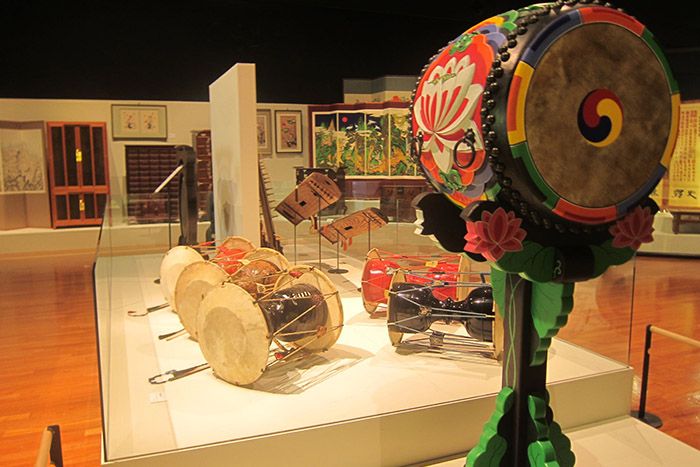
This palace is pretty huge. I think we went through three courtyards before deciding to take off on our own and find the National Folk Museum of Korea. Finding that involved a lot of walking around as well. We went through a couple of exhibits about Korea's history, and one about its crafts. I'm not quite sure how else to describe a couple of hours in a museum--we ran into a Thai tour group, tried out the vending machine, took mirror selfies in ancient mirrors, and checked out the drums, divider screens, ornate silken robes behind the glass panels.


We left the museum in the late afternoon, and decided to check out the hypercrazy shopping district of Myeongdong. While we were walking to the station, we noticed a South Korean flag crossed with a Philippine flag on each of the streetlights. Evidence of Noynoy! He arrived the same day we did, to purchase some planes.

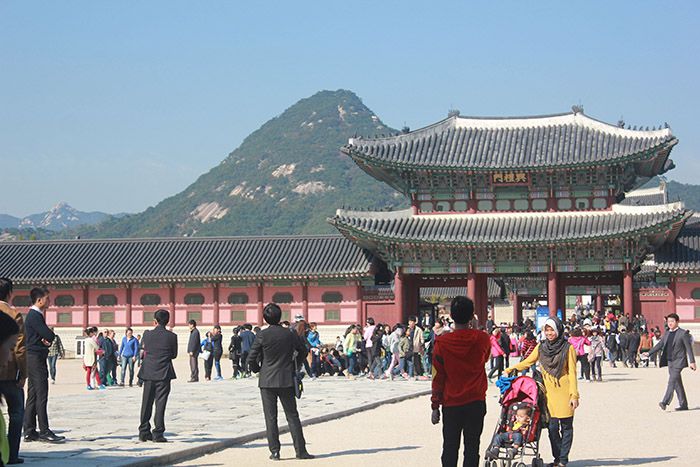
It's interesting how Gyangbokgung is framed by mountains on one side, and skyscrapers on the other. I love how old and new structures grow inside the same space. Though dwarfed by tall glassy buildings, the palace maintains its authenticity and relevance, standing majestic against the mountains. The past is clearly of great value to the South Koreans; perhaps this is because so much of it was lost during the split with NK (more on that in the next post).


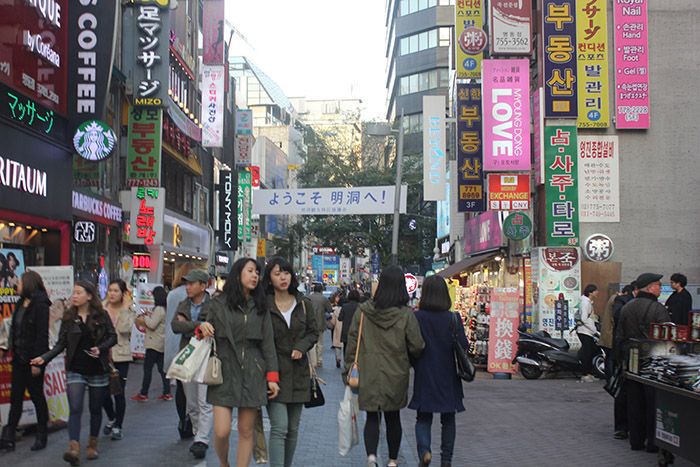
Tita Young had somewhere to go that afternoon as well, so we said goodbye to her when we got off at Myeongdong station. Upon exiting, we were swept up in the lights, the sounds, the smells and the retail madness. We went into a bunch of shoe stores looking for stuff for mom. The people of Seoul do love their colorful footwear. Didn't find any that were her style, though. There were makeup stores at every corner, alternating with apparel stores and restaurants, and sales people hanging out, yelling at the passing crowd and waving products. Unfortunately, we were pretty beat after all the walking around Gyangbokgung, so we didn't hold up very long in Myeongdong. Mom and Dad bought some candied sweet potato (yay, Kamote) and I got one of those spirally potato chip sticks. Abby bought an album for her friend, and the parents dropped by the Nanta theater to inquire about tickets. We spent a long while in there. After that, we walked to Chungjeongno station (going through the Lotte department store and the Myeongdong underground shopping complex I believe) and brought our tired selves home to the Studio 41st neighborhood.

We ate at one of those sit-on-the-floor places (shoes off!) which only had three things on the English menu. We ordered all three. I had all-veggie Bibimbap, Dad had some kind of spicy soup, and everyone else had this fried fish dish. An old man from the next table was staring at us, as was a child from another table (clad in a neon yellow tracksuit!) Either we stuck out so horribly (despite not being white) or I was being offensive by not having any socks on. D: (not sure!)

Things I learned:

- Korean royalty had enough space on their thrones to lounge comfortably.
- Better socks than sorry.
- The cast of Nanta are named accordingly: Head Chef, Nephew, Manager, Female, Sexy Chef.
- The Sexy Chef must always have a moustache.
- Do not jaywalk in front of the main palace! We saw some foreigner-men in suits attempting this, and the guard immediately called them out.


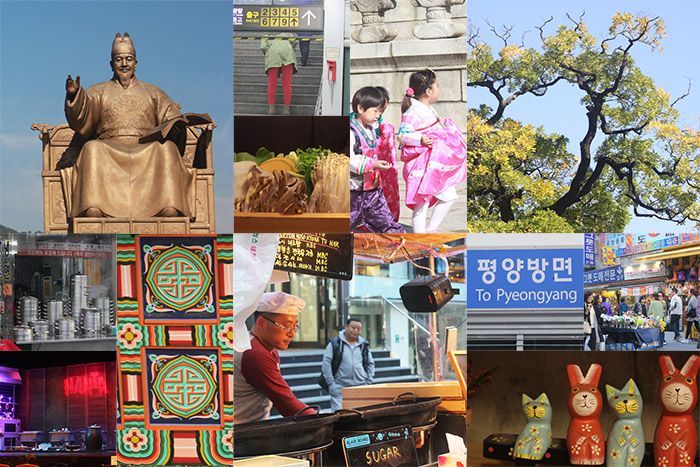
Seoul is, to me, a city of palaces, ancient gates and skyscrapers, street-food tents, neon signs and the smoke of barbecue, subway trains and permed ajummas, helpful ajussis, kimchi and T-money. And let's not forget the sparkling, round-eyed celebrities, cozy coffee shops and the sea of striped shirts, thick black frames and chic army jackets.

The family decided to go somewhere special this semester break, due to the fact that we all now have a week to spare in October. Ab, Mom and Pat had their two weeks off, Dad took a leave, and I, the unemployed one, never felt so good about being unemployed.

Three countries were up for initial consideration: Thailand, Korea, and Australia. Monsoon rains took Bangkok off the list, and both my parents felt just a week in Australia wouldn't do it justice, given the number of friends and relatives we have over there (and the places to visit). So, Seoul it was!

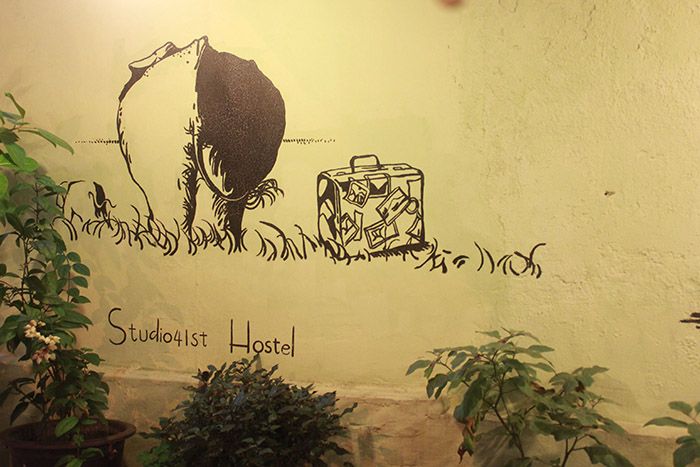
Like last time, I took care of looking for a place to stay. Because we wanted to spend more on shopping, food and sightseeing, I looked into guesthouses and BnBs instead of hotels. We booked a six-night stay at Studio 41st, a guesthouse in the residential area of Yeonnam-dong, in the Hongdae area. And it was the best.


We booked 2 family rooms, each good for up to three people. The rooms were clean, well-equipped and cozy. There was a PC that doubled as a TV, a washing machine, hair dryer, a sink, a table and chair, and a small couch. 

Abby was constantly on the TV, watching un-subtitled dramas (which she couldn't understand anyway). Pat took advantage of the crazy fast internet, and so began downloading anime using my laptop. As for me, I got the first episode of Samurai Flamenco, and the second of Kill La Kill (decided to drop it after). 

But let me tell you about our first evening there.


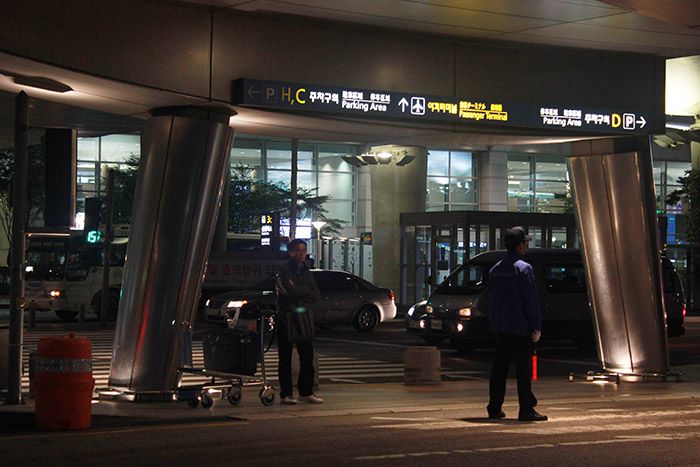
We arrived at Incheon Airport at around 8, all bundled up and ready for the cold (or so I thought). The air was pleasantly cool, and it was a little warmer than Washington in the first throes of summer. Dad booked a pick-up van through Studio 41st, and so we piled in there. It took us around an hour and a half to get to the guesthouse, where we checked in, dumped our bags in the rooms, and eyed the resident cats. 

The manager for that evening was Adrian, clad in all black, with a knitted beanie and a pair of those hipster frames, the accessory of choice for a lot of people in Seoul. We were hungry. He took out a map of the Hongdae area, and pointed us to one of the best barbecue places we'd ever go to, called ChungKiWa SaengGoGi. It was a ten to fifteen minute walk from Studio 41st, so out we strolled. Along the way, we passed a lot of small cafes, restaurants and convenience stories.

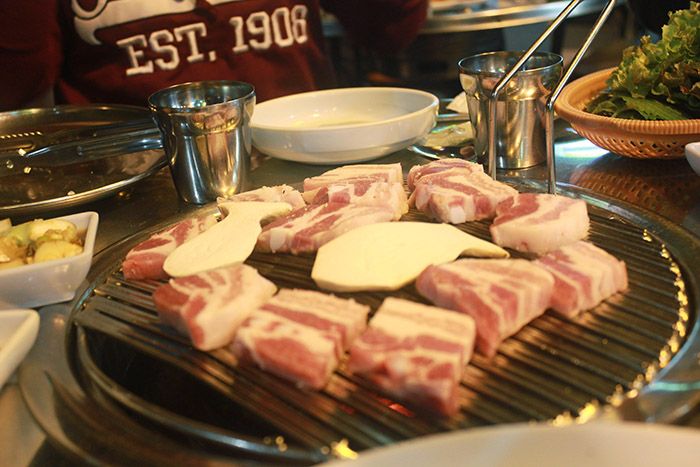
Confession time: We had no idea what to do once we got to the bbq place. Dad wasn't even sure it was the one the map was talking about, so we stood in front for a few minutes looking very much like disoriented foreigners before one of the staff approached us and sat us down at a table out on the sidewalk. We ordered samgyupsal, and thin slices of beef, a beer for Dad and a bottle of soju for extra warmth. The charcoal grill was right in the middle of the table. The place was full, even if it was past 9 pm. Another lady came and served up two bowls of soy bean paste soup, various side dishes, two baskets of lettuce, and our drinks. We stared at each other blankly, wondering where the individual plates were. And this is when we learned our first lesson about eating in Seoul: everything is communal.


When the meat was brought over, we still weren't sure what to do. The lady took things into her own hands and cut up the pork belly with a pair of scissors, grilling it with the kimchi. Once that was cooked, she told us to wrap the meat in the lettuce after dipping it into some sauce. It was good. And it went well with the soju, which Mom kept drinking to keep warm. I guess her tolerance is pretty good (unsurprising, because Beyer genes.)

We walked back to Studio 41st, a tad wobblier than before, and a lot colder. Never underestimate the night winds! Pat and I watched Kill La Kill, I did a bit of planning, and then we all fell asleep.

Things I learned:

- The people of Seoul are generally friendly and helpful to tourists
- We look Indonesian
- Soju isn't so horrible, but isn't as strong as sake
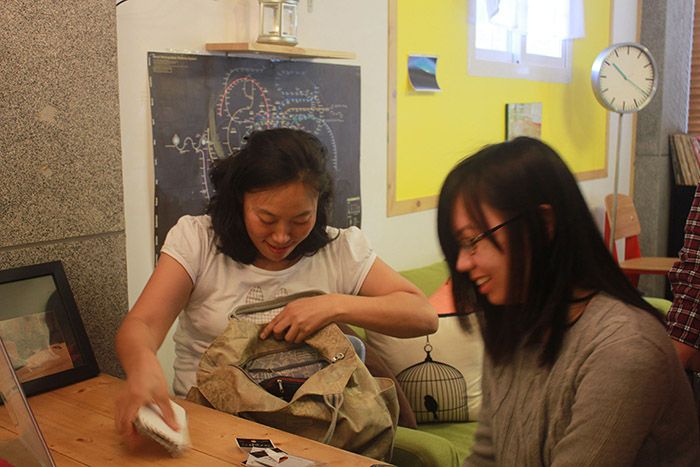
- Ladies put their bags into plastic bins / boxes under the table.
- Sitting out on the sidewalk stuffing your face with grilled meat is the best thing ever. But take off your jacket when eating samgyupsal this way if you don't want it smelling like meat.

(All photos were taken by the illustrious and semi-respectable Abigail Portugal).

Summer began at the end of April. After fainting a few minutes into the Batch 2013 university grad, doing last-minute pasalubong shopping for everyone at Kultura (thank God for that store) and lying sweaty and sleepless on my cousin's bed, staring listlessly at the blue ceiling-shadows awaiting 3am, I was whisked off by giant white air-conditioned van, by porter-trolley, conveyor belt and pat-down guard, carry-on stroller wheels, diaper bag and smiling Delta airline employees to the large plane that would rattle through the sky and bring us, eyebagged and excited, to the United States.

I went with my Aunt and cousins on the month-long trip. Traveling from mid-May to mid-June, we visited relatives from my Dad's side of the family, spending a couple of weeks in Washington, and then the rest in California. I was excited, and a little apprehensive. America--it had been a while. I hadn't seen the people there in five years, and others, in ten. Would it be alienating, uncomfortable, magical? I remember being amazed, as a child, at the pizza slices as big as your face, the quarter pounders I couldn't finish, the cold bite of the air and the accented everything.

We stopped over in Japan first, and I strolled around Narita airport with my little girl cousin, from hereon to be referred to as Mishie. We beheld the multi-functioned toilets and immense line at McDonald's, the display of green tea KitKat and the Studio Ghibli merchandise. We each bought a Totoro, despite Mishie not knowing what it was. I tried my best to inform her, at any rate.

The Emerald Cities

One 11-hour flight later, we heaved our suitcases (ten for four people) off the carousel and greeted Uncle Dwight and Auntie Istin, who loaded our stuff into the family minivan. I strapped Angelo into his "special chair" (the carseat), buckled myself up and off we drove, into a new concrete-and-greenery world. Seattle and Tacoma are referred to as twin cities, emerald cities. (Or is it just Seattle that's considered 'emerald?) According to my cousin, the emerald is because of the abundance of trees, caused by the abundance of rain.

"If you don't go out because it's raining, you'll never go out."

So go out we did. Auntie Istin drove us everywhere. We went to the zoo, the beach, the thrift shop, onto a ferry, onto an island, to the little towns that surrounded Puyallup. We went to Seattle a handful of times, ate glorious seafood, saw the ports and the fishing boats and the daylight shining in the water at 7:00 pm. It was Starbucks every other day, and ice cream just as often. I ordered, in perpetua, green tea latte. For Angelo and Mishie, it was always cookies and cream.

Puyallup is the suburbs. Everything out on that end was large and wide--winding roads, fields, the constant texture of trees, bushes and flowering shrubs. You can't commute anywhere. The city is at least a twenty-minute drive away, and there is always the patter of raindrops on the windshield. There were one-storey structures, some apartment buildings, lumber yards, places selling playground equipment and cars. We drove up to someone's house on a hill, and saw the ocean and the fishing boats that went all the way to Alaska. They have a really nice children's hospital, where we visited the newest member of the Portugal clan, baby Xavier.

This is Auntie Istin and Uncle Dwight's Puyallup house. Tucker the puppy likes hanging around the small dining table in anticipation of table scrabs, which he is denied (he has his own tupperware of boiled chicken). It's a cozy place, and impeccably maintained and arranged. It's usually cold in the garden, but the good kind of biting cold. There are hummingbirds, sometimes. 


I kinda wish we were able to spend more time walking around downtown Seattle, investigating the shops and the city monuments and all. We were brought to a park a few minutes away from my cousin's university, where you get a good view of the space needle and all the buildings. 


I only own two pieces of luggage here, and the second one is that box with one painting in it, towards the end. Now that I think about it, it's amazing how two children, one senior citizen and a frail girl like me were able to get everything through the airports. 

By the time we left Puyallup, things were starting to feel like home: the warm blankets, the cat that managed to stretch out on my bed every night, the spreads from Costco. But it had to end at some point, and to be honest, I was quite ready to trade the grey skies and wet sneakers of Washington for the dry sunshine and jacaranda trees of Los Angeles. 


Day 2 had us up early in time for a 7am private tour, which the parental units booked through the hotel. Our guide was the ever-talkative and informative Mister Cong, a skinny, slightly balding man clad in a long-sleeved white polo, black slacks and leather shoes. He used to be a physics teacher, but traded that in for the life of tour guiding, due to the dismal pay.


We piled into the large white van labeled Hoi An Tours, and set off for a day of rivers and rice paddies. The two-hour ride to the town of Cai Be took us past miles and miles of fresh, green, extremely familiar scenery--farmers bending over rice paddies. It was reminiscent of the 12 hour road trip to Isabela we'd taken a few days before, the only difference being (1) the Vietnamese farmers had their signature conical hats and (2) they buried their dead in the middle of the field. I kid you not. A common sight rushing by the window was a grave marker, or a cluster of grave markers sticking right out of the green field. Said Mr. Cong: "They want to keep the family members close to them, so they remember, and they always happy."

At Cai Be, we boarded a boat to take us to the floating market, or what was left of it. I'd read that the market is at its most active at 6:30-8:30 in the morning, and it was around 9:30 when we got there, so all that was left was a handful of the larger boats selling pumpkins, watermelons, etc.


We stopped over at the village of Vinh Long to see how the riverside folk made their local products--honey, bee pollen, rice candies, wine, rice paper, and conical hats. We bought a bit of everything except the wine and the rice paper at the behest of Mr. Cong. The tea + honey was excellent, though. There's just something about Jasmine tea that draws you, I guess. Strewn about the place were various paintings, piles of tourist kitsch and little children. Pat and I found this aquarium a little way outside the house where they were making the products. It had one huge fish in it, the same sort they served for lunch later on, if I'm not mistaken.

Mr. Cong was relentless with the spewing information bit. We paddled down to another riverside house, this time with clay tiles on the roof and ornate wooden furniture. They brought out the traditional Vietnamese singers and musicians to play us three or four songs while we sipped more Jasmine tea and partook of fresh fruits. Memorable was this old man with a greying goatee, plucking at his one-stringed instrument. They had planting songs and couples-in-the-ricefield songs (sound familiar?) and all in all, I guess it was a good winding-down activity to end the tour with.

45 minutes downriver and we found ourselves on the other side of the Mekong. Mom needed to use the bathroom but opted to wait till we got to the hotel when Mr. Cong pointed out the nearest one. 2 hours of watching rice fields evolve into buildingscapes, lapsing in and out of sleep, munching on Vietnamese breadsticks brought us back to HCMC (Mr. Cong had since then plugged into his headphones) and safely back to the hotel.

A few hours later, the New Year festivities along Nguyen Hue began.


Powered by Blogger.